


Getting a good night’s sleep is essential for mental, physical, and emotional well-being. Yet, with busy schedules and daily stressors, quality sleep can often feel out of reach. To help you reclaim restful nights, we’ve gathered practical, science-backed sleep tips and advice from Casper’s sleep expert, Catherine Wright, a sleep specialist at Recoop Care.
Why sleep hygiene matters
Good sleep hygiene refers to the habits and routines that set the stage for restful sleep. According to Catherine Wright, the most important elements of sleep hygiene include:
Consistent bed and wake times
Sticking to a regular schedule, even on weekends, helps regulate your body’s internal clock (also known as your circadian rhythm—more on this below). This not only improves sleep but also supports stress management and overall well-being.
Having a bedtime “buffer”
Create a wind-down routine at least an hour before bed. Switch from your “doing self” to your “being self” by setting an electronics curfew and engaging in calming activities like reading, stretching, or taking a warm bath.
Being mindful about caffeine and alcohol intake
Know your personal cut-off times for caffeine and alcohol. Both can linger in your system long after you've ingested them. The result? Disrupted sleep. Plus, the effects of alcohol and caffeine on your sleep (and your overall physical well-being) often become more pronounced with age.
Harnessing your circadian rhythm
According to Wright, “Your body is essentially one giant fleshy clock! Your circadian rhythm (body clock) regulates everything from energy and metabolism to appetite and sleep. When you keep a consistent bedtime and wake time, you calibrate your circadian rhythm, improving your ability to fall asleep and stay asleep with more ease.”
In order to harness your circadian rhythm, Wright recommends the following:
Prioritize morning light exposure
Get at least 20 minutes of natural sunlight within an hour of waking up. This helps set your internal clock and prepares your body to produce melatonin (the sleep hormone) later in the day.
Wind down with intention
In the evening, dim lights or use soft lighting, like the Casper Glow Night Light, to signal to your body that bedtime is near.
Eat your meals around the same time
Meal timing also matters. Try to eat breakfast, lunch, and dinner at consistent times each day.

How daily habits impact sleep
Wright shares that everyday choices play a big role in how well you sleep.
Screen time
When it comes to winding down for the night, not all screens affect us equally. Research suggests that watching a show on a TV, where you’re seated farther from the light source, may be gentler on your sleep system than using a tablet or smartphone, which emit more concentrated LED light up close.
But the type of content matters just as much as the device. “Either way, we want to be sure that what we are consuming is not upsetting or overly overstimulating (activating the nervous system), so that we can drop into restful sleep once we settle in for the night,” shares Wright. Opt for something soothing or consider skipping screens altogether in the final stretch before bed to give your mind space to settle.
Exercise
Just 20 minutes of moderate exercise daily has been proven to increase how quickly you fall asleep and how long you stay asleep. However, the key word is “moderate.”
Wright shares, “If you enjoy high intensity workouts, it’s recommended to do these in the morning or midday, not in the last two to three hours leading up to bedtime.”
To help your body transition after exercise, especially on days when your muscles feel taxed, using the Casper Lifestyle Adjustable Base can make a noticeable difference. Elevating your feet before bed can encourage healthy blood circulation and support muscle recovery, helping you wind down more comfortably and ease into sleep.
Caffeine
The half-life of caffeine is three to seven hours. Know your cut-off time, and remember it may get earlier as you age.
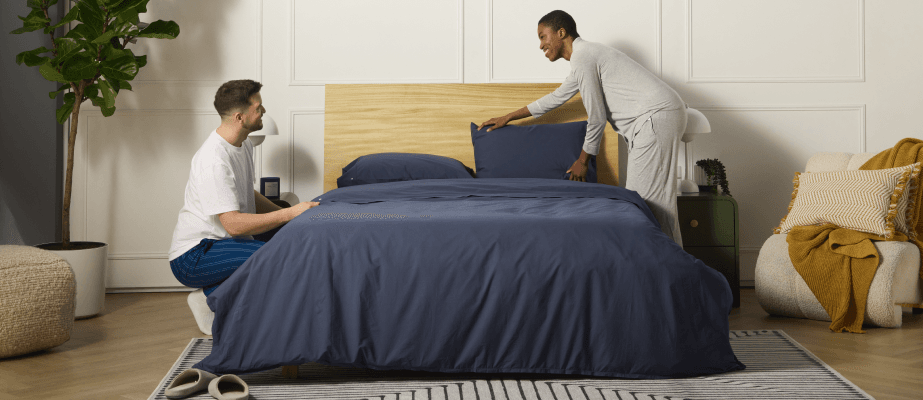
Science-backed tips to fall asleep faster
Falling asleep faster isn’t just luck, it’s about supporting your body’s natural processes. If you have trouble dozing off at night, these expert sleep tips are for you:
Take a warm bath or shower
This helps lower your core temperature, signaling your body to start sleep processes.
Avoid big meals before bed
Give yourself at least three hours after eating before heading to bed.
Choose the right mattress for your sleep style
The right mattress can significantly improve your sleep quality. A great mattress will support spinal alignment, ease pressure points (do your hips ache when sleeping?), and help regulate body temperature, resulting in a deeper, more restful sleep.
To improve your sleep quality and overall health, it’s important to choose a mattress that suits your body type and sleep position. Take our Mattress Quiz and discover how to find the perfect mattress for your sleep style. Once you know whether a hybrid or memory foam mattress is right for you, shop Casper mattresses.
Limit exposure to bright and LED lights
Use dim lights or soft, side lighting in the hour before bed. When you’re ready to fall asleep, make your space as dark as possible.
Don’t want to trip when you get up for a drink of water in the middle of the night? Shop the motion-sensored Casper Glow Night Light (perfect for hallways, kitchens, bedrooms, and bathrooms).
City lights impossible to block out? Consider a sleep mask, like the Casper Winky Sleep Mask, or blackout blinds.
De-clutter your bedroom
Your bedroom should be a sanctuary for rest, and this starts with keeping it clean. A tidy, screen-free room can help calm the mind. Oppositely, a messy room will only add to your stress, making it more difficult to fall asleep.
Look for bedroom furniture with ample storage that makes it easy to de-clutter. The Casper Repose Wooden Nightstand has a spacious, deep-set drawer where you can store all your devices to keep them out of sight.
Reduce noise as much as possible
Just like how too much light can make it difficult to fall asleep, so can too much noise. Minimize noise by turning on a fan, using a white noise machine, closing windows, or sleeping with earplugs.
Set the thermostat to an optimal temperature
Another tip to help you fall asleep faster is about temperature. Make adjusting the thermostat part of your bedtime routine. The optimal temperature for sleep is between 17 and 19 degrees Celsius (about 62–66°F)—much cooler than most people would guess.
According to Wright, “The body’s core temperature drops by about 1 degree Celsius when we are falling asleep. This gradual cooling of the core signals to the brain it’s time for sleep. Cooling mattresses like Casper’s Wave Hybrid Snow, cooling sheets like Casper’s SuperSoft TENCEL™ Sheets, and a cooling pillow like the Hybrid Pillow with Snow Technology™ help ensure your body temperature is regulated throughout the night. This is a big bonus when improving sleep quality is a priority.”
Learn more about Casper’s Hybrid Pillow (a top side sleeper pillow in Canada), as well as our Foam Pillow - Loft Loft (an excellent back sleeper pillow that may help with neck discomfort when sleeping)

Final thoughts
By following the sleep tips above and making small, intentional changes to your daily habits, bedtime routine, and sleep environment, you can set yourself up for deeper, more restorative sleep. Remember, consistency is key, and if sleep issues persist, reach out to a healthcare professional for personalized support.
FAQs
What is the best bedtime routine for better sleep?
A consistent bedtime routine, like reading, stretching, or a warm bath, signals to your body that it’s time to sleep. Avoid screens and swap dim lights like the Casper Glow Night Light, for bright, LED lights.
How does light exposure affect sleep?
Morning sunlight helps set your body’s internal clock, while dimming lights in the evening prepares your body for rest. Keeping your bedroom dark at night supports deeper sleep. Consider a motion-sensored light like the Casper Glow Night Light and a sleep mask like the Casper Winky Sleep Mask.
When should I stop drinking caffeine or alcohol?
Know your cut-off times, often early to mid-afternoon for caffeine and several hours before bed for alcohol, to prevent these substances from disrupting your sleep.
What temperature should my bedroom be for optimal sleep?
A cool environment, ideally between 17 and 19°C (62–66°F), helps your body maintain the natural drop in core temperature needed for sleep.
To stay cool throughout the night, consider investing in sleep essentials with cooling technology, such as the Wave Hybrid Snow Mattress, Foam Pillow with Snow Technology™, Hybrid Pillow with Snow Technology™, SuperSoft TENCEL™ Sheets, QuickCool™ Mattress Protector, and QuickCool™ Pillow Protectors.
Learn more about the best cooling mattresses for hot sleepers.
Does exercise really help with sleep?
Yes! Regular moderate exercise improves sleep quality, but avoid vigorous, high-intensity workouts close to bedtime.
Can the right mattress improve sleep quality?
Yes, the right mattress can significantly improve your sleep by providing proper spinal alignment, reducing pressure points, and regulating body temperature. A supportive and comfortable mattress helps you fall asleep faster and stay asleep longer, leading to less pain and stiffness in the morning.
Choosing a mattress that balances support and comfort for your body type and sleeping position is crucial for better sleep quality and overall well-being. Explore Casper mattresses and learn more about choosing a mattress for your sleep style.
Is there a scientifically “best” direction or position to sleep?
Wondering which direction to sleep scientifically? Evidence suggests that side or back sleeping generally supports better spinal alignment than stomach sleeping. However, factors like comfort, light, noise, and airflow may matter more than sleep position when it comes to sleep quality.


